
Injured on a Construction Site in Los Angeles? You May Have Two Claims, Not One
August 12, 2026 |
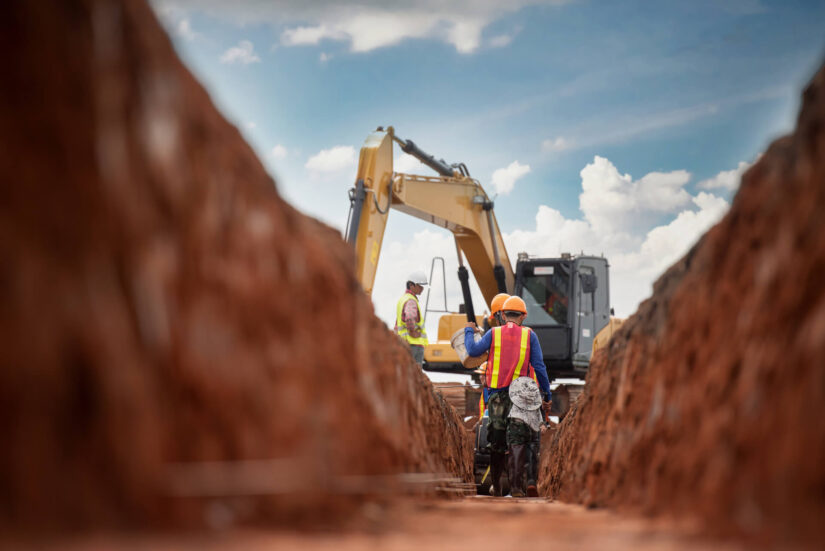
You fell from a scaffold, or a load came down on you, or a piece of equipment failed. You filed workers compensation because that is what everyone told you to do. The checks are smaller than your paycheck was, they do not cover what you are going through, and you have been told that is simply how it works.
For a lot of injured construction workers, that is not the whole story. Workers compensation may be only one of the claims you have, and the second one is usually worth considerably more.
Why Workers Compensation Feels Like Too Little
California workers compensation is designed to be quick and certain rather than complete. You do not have to prove anyone was at fault. In exchange, what you can recover is limited.
It generally pays for medical treatment, a portion of your lost wages while you recover, a permanent disability award based on a rating, and sometimes retraining. What it does not pay is anything for pain and suffering, for the life you cannot live the way you used to, or for the harm beyond your lost paycheck.
That is the gap injured workers feel. The injury changed everything, and the benefits address only the narrowest part of it.
The Claim Most Injured Workers Never Hear About
Workers compensation is usually your only remedy against your own employer. That is the trade the system is built on.
But construction sites are not staffed by one company. A typical Los Angeles job has a property owner, a general contractor, multiple subcontractors, equipment suppliers, and delivery drivers coming and going. If someone other than your employer caused your injury, you may be able to bring a personal injury claim against that third party, entirely separate from your workers compensation case.
A third party claim is not limited the way workers compensation is. It can include pain and suffering, full lost earnings, loss of future earning capacity, and the other damages available in any injury case.
So the question that matters is not just whether you were hurt at work. It is who actually caused it.
Who Might Be Responsible Besides Your Employer
On construction cases, the potential third parties usually include:
- The general contractor, when it is not your direct employer and it controlled site safety or created the hazard
- Another subcontractor whose crew left an opening unguarded, stacked material unsafely, or damaged equipment you then used
- The property owner, depending on how much control they kept over the work and whether they knew about a dangerous condition
- An equipment manufacturer, if a lift, saw, harness, or other tool failed or lacked required guarding
- A maintenance or rental company that serviced or supplied defective equipment
- A driver who struck you, whether on site or while you were working near traffic
Sorting this out takes early investigation. Job site conditions change within days, equipment gets repaired or returned, and witnesses move on to other jobs. Photographs, the site safety plan, subcontractor agreements, equipment records, and any Cal OSHA inspection findings all matter, and they are easiest to obtain early.
Deadlines That Are Shorter Than People Expect
This is where cases are lost outright, so it is worth being specific.
For the workers compensation side, you are generally expected to report the injury to your employer within 30 days, and a claim must typically be filed within one year of the injury.
For a third party personal injury claim, California generally allows two years from the date of injury to file a lawsuit.
And if a public entity is involved, which happens on public works projects, road jobs, and school construction, there is usually a six month window to present a claim to that government entity before a lawsuit is possible. Six months passes quickly while you are focused on surgery and physical therapy.
Those deadlines run at the same time, independently. Filing workers compensation does not preserve the personal injury claim, and many workers discover the second claim only after the time to bring it has passed.
What Happens To The Two Claims Together
When both claims exist, they interact, and handling them as if they were unrelated causes problems.
The workers compensation insurer that paid your benefits generally has a right to be reimbursed out of any third party recovery. That right is real, but the amount is subject to negotiation and to reductions that account for your attorney fees and litigation costs, and for your employer’s own share of fault where it contributed to the injury.
Handled well, the two claims work together and you keep considerably more of the recovery. Handled separately by people who are not talking to each other, the lien can consume much of what you won.
If your injury is severe enough to keep you out of work long term, Social Security disability enters the picture as well, and a third claim brings its own offset rules. Settlement documents in the workers compensation case can be drafted to minimize the effect on your Social Security benefits, but only if someone is looking at all of it at once.
When Your Employer Loses Its Protection
There are narrower situations where the usual shield around your employer does not fully apply.
If the injury resulted from your employer’s serious and willful misconduct, California law allows an increase in your compensation. This is not ordinary carelessness. It means knowing disregard of a serious danger, and it requires proof, but it exists and it is worth evaluating when a known hazard was ignored or a safety device was deliberately removed.
If your employer carried no workers compensation insurance at all, which is not rare in construction, you are not without options. California maintains a fund for injured workers of uninsured employers, and an uninsured employer can also lose the protection that normally limits your claim against it.
And if you were treated as an independent contractor when the reality of the job made you an employee, that classification can be challenged. Construction has specific rules on this, and being handed a 1099 does not settle the question.
Immigration Status Does Not Disqualify You
This needs saying plainly because it keeps injured workers in Los Angeles from filing at all.
California workers compensation covers employees regardless of immigration status. The law defining who counts as an employee does not condition coverage on documentation, and California has specifically protected workplace rights irrespective of immigration status. An injured worker who is undocumented is still entitled to medical treatment and benefits.
Fear of retaliation is understandable, and retaliating against a worker for filing a claim is itself unlawful. If an employer has threatened you over a claim, that is a separate problem worth raising rather than a reason to stay silent.
Questions People Often Ask About Construction Injuries
Workers ask whether filing a personal injury claim will cost them their workers compensation benefits. It generally does not. They are separate claims, and pursuing one does not forfeit the other.
Another common question is whether they can sue the general contractor when the general contractor runs the site. Sometimes yes, depending on who employed you and how much control that company had over the conditions that hurt you. It is a fact specific question and worth having answered rather than assumed.
Workers ask what happens if they were partly at fault. In workers compensation, fault generally does not matter. In a third party claim, California reduces recovery by your share of responsibility rather than eliminating it, so being partly at fault does not end the case.
People ask about returning to work. Accepting light duty does not end your claim, and a permanent disability rating can still be pursued. What hurts workers is going back to full duty they cannot actually perform and then being told the injury must have resolved.
And workers ask about cost. These cases are handled on a contingency basis, so there is no upfront fee and payment comes out of the recovery. Workers compensation fees in California are set and approved through the system rather than billed to you.
Speak With Our Los Angeles Construction Accident And Workers Compensation Attorneys
At Pisegna and Zimmerman Attorneys at Law, we handle workers compensation, personal injury, and Social Security disability in the same office. Construction injuries are exactly the kind of case where that matters, because the worker often has a claim in two or three of those systems at once and each one affects the others.
We investigate who besides your employer contributed to the injury, preserve the site and equipment evidence before it disappears, protect the deadlines on both claims, and negotiate the compensation lien so the third party recovery actually reaches you.
Our firm has over 60 years of combined experience, and we represent injured workers across Los Angeles, Sherman Oaks, Long Beach, Norwalk, San Bernardino, Santa Barbara, Bakersfield, and throughout Southern California.
If you were hurt on a construction site and workers compensation is all anyone has offered you, call our office at (818) 888-8888. There is no pressure to commit. Finding out whether you have a second claim costs you nothing.